Showing posts with label Capitalism. Show all posts

Wednesday, October 19, 2011

Five Instances of Destructive Corporate Greed

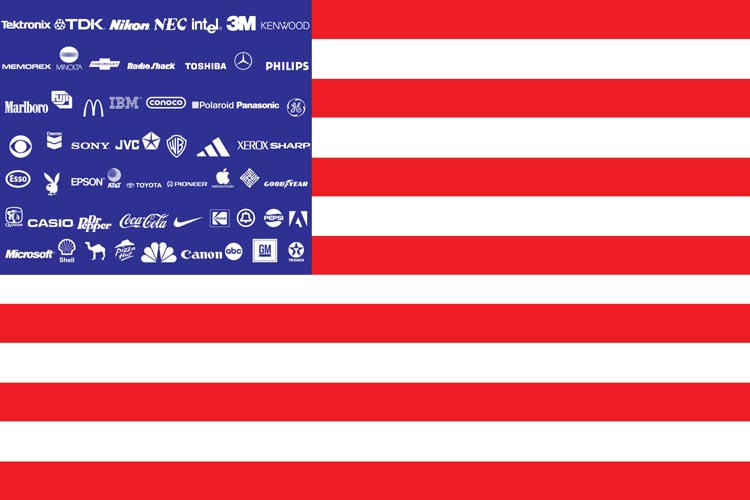
While I have cited instances where the #OccupyWallStreet movement is valuable, permit me to cite instances where the current economic status quo is non-valuable and explicitly detrimental. While the focus of the movement is protesting banking institutions, the ramifications of corporate greed go far beyond inequality and unemployment into a myriad of injustices. I can go far beyond five, but for the sake of time and readability, I’ll stop there. 

#5: Nike, Outsourcing Slavery

Nike’s use of Chinese sweatshops to manufacture shoes is not exactly an obscure topic. Indeed, this has resulted in one of the most widely-covered boycotts in recent memory. Nonetheless, it represents perhaps one of the best examples of how cost-cutting costs lives. The meager labor laws of developing countries like China, coupled with the disparity between different types of currency, allows companies to outsource work at rates far below living wage in despicable conditions often exceeding 14 hours. Here, the maximization of profits supersedes the business’s responsibility to conduct its work in an ethical and fair manner. Thus, stockholders and boardmembers get rich at the expense of foreign laborers that they will never know.

32548808
Thankfully, Nike has since created a board to investigate conditions within their own factories. Nonetheless, Chinese sweatshop labor isn’t isolated to Nike, even the perpetually hip Apple admitted to exploitive practices for iPod manufacturing.

#4: Monsanto, Patenting Genetics

Monsanto Anyone who has watched Food Inc. is familiar with the cutthroat brutality of the food industry, and Monsanto has been cited as the worst offender, consistently valuing profit over human life, freedom and prosperity. The company acquired a strain of soybean possessing a strand called the “Terminator Gene”, which causes the seeds to produce sterile plants, thus negating the chance of a second harvest. This essentially cuts away any chance of farmer-independence  by forcing growers to repurchase seeds annually.
The patenting of the GMO has caused major problems for farmers at all levels. As the world’s largest supplier of seeds, farmers have little choice but to purchase the relatively inexpensive Monsanto seed. As a result, factory farm conditions explode and independent farmers are driven out of business. These exploitive practices led to a mass-exodus of small farmers in Argentina as they failed to make profit as well as an explosion of the farmer-suicide rate in India as independent farmers were plunged into debt.

#3: McDonalds, Causing the Disease of Affluence

By a large margin, McDonalds is far more panned by anticorporate groups as a symbol of the problems of globalization than any other American company. This criticism is not unfair though, and the company has a contentious history that existed before the release of Spurlock’s Super Size Me. For one, in his book Fast Food Nation, Eric Schlosser alleged that the company’s targeting of children in its marketing was responsible for the childhood obesity epidemic. This was the cause of a 2010 San Francisco law banning the inclusion of toys in Happy Meals.


In the bigger picture, what is more problematic is the price disparity between environmentally-sustainable, locally-grown food and processed fast-foods. Anyone with the slightest familiarity with Michael Pollan understands the destructive effects of the mammoth amounts of salt, sugar and saturated fat included in these foods, and the relatively high price of healthy foods relegates the poor to diets comprised of packaged and processed foods. This causes the so-called diseases of “affluence”, namely, diabetes, obesity and certain types of cancers.

#2: Sony, Restricting Intellectual Freedom

anonymous-sony-ps3-hacker-attack-thumb-610x335-37415
The next instance deals with the crux of the open-source movement and its advocacy of property rights when applied to software. When it was released, the Playstation 3 was touted for its ability to run Linux among other operating systems. Free-software advocates praised Sony for allowing users this freedom and the system was lauded by many.

In March of 2010, Sony cut the feature in its 3.2.1 update, thus provoking modders to attempt to restore the feature. Renowned iPhone hacker George Hotz successfully hacked the system and found a way to restore the Linux functionality and released a guide both on his blog and on YouTube. Sony sued Hotz and demanded social media sites to surrender IP addresses of people who viewed Hotz’s guides. After a complicated tangle of legal threats, a Spanish splinter group of Anonymous released a DDOS attack on Sony, thereby bringing down the Playstation Network for a record-setting month.

Sony’s infraction here constitutes an abridgement of personal autonomy and ownership rights. If an individual owns a piece of property, s/he should be able to do whatever he pleases to said property. By essentially cracking down on people possessing knowledge of how to modify the Playstation, Sony directly infringed on both the intellectual and property freedom of property owners. The company stated that the removal of the Linux feature was to prevent piracy, thereby maximizing profits. By suing GeoHotz for teaching people how to hack, Sony essentially abridges the all-important freedom of knowledge, thereby obstructing democracy.

#1: Outsourcing, Subverting Trickle-Down Economics to the Cost of All

The final instance that I will talk about does not deal with a single corporation, but rather an economically unsustainable trend resulting in recession. In order to maximize profits, corporations outsource work to developing countries where products can be manufactured or work can be done for a comparatively low price. While I do support stimulating the economies of developing countries, infant labor laws allow for corporations to pay paltry wages in unethical conditions. Furthermore, while our modern economy is a global one, outsourcing work causes people to lose jobs on the national level. As jobs are shipped overseas, our own economy is neglected and the “trickle-down” effect is subverted. Thus, Americans lose jobs and movements like Occupy Wall Street happen as the percentage unemployed skyrockets. 


Tuesday, February 23, 2010

Why Capitalism and Industrialization is Immoral

The following is an essay I wrote for my high school history class on why the capitalistic system is immoral and industrialization is destructive.


The term “communism” refers to German philosopher Karl Marx’s economic system of absolute socialism. It involves the elimination of a social-class system and a formal government. In a communist society, all property is shared among the people. Communism is opposed to capitalism, which is Adam Smith’s economic system of a free market with no government intervention on the economy. Capitalism has been responsible for major social and economic problems throughout history. The dismal conditions and inequalities of the Industrial Revolution were a direct result of capitalism. Capitalism is intended to create prosperity through competition; however, the Great Depression was a result of the capitalistic system. As capitalism has caused major social and economic problems, communism provides a more ethical alternative to capitalism because it provides regulations to prevent inequalities, controls recessions and stop plight

A capitalistic economic system was responsible for the rapid urbanization of the Industrial Revolution and the poor living and working conditions associated with it. By 1850, the once agrarian English town of Manchester evolved into a behemoth textile-manufacturing town of 300,000 as a result of industrialization. Although urbanization was responsible for producing cheap goods, it caused dismal working and living conditions. Industrialized cities were filthy, dangerous places without development and sanitary regulations. Piles of trash heaped up outside of one-room apartments where entire families were sheltered. An 1842 study found that the average life span was 17 in an urban area as opposed to 38 in agrarian regions. Working conditions were dangerous too. The average worker spent 14 hours a day working for six days a week. Machines used for production often injured workers. Children as young as six joined the factories of Manchester, working hours of backbreaking labor with few breaks. Another study found that coal miners on average lived ten years shorter than other workers. These dismal conditions were the result of the capitalistic system. The proletariat workers served as an easily replaceable resource for employers to maximize profits. If a worker was injured and made unable to work, he could be replaced with a physically competent laborer. Industrialization and its detrimental aspects were products of capitalism. Given a controlled communist system, urban plight would be kept under tight control, thus, making communism more effective than capitalism in this regard.

Proponents of capitalism believe that economic freedom leads to progress and prosperity, but the presence of recessions disproves this. Adam Smith believed that removing government intervention in the economy guaranteed economic progress and social mobility. In his 1776 book The Wealth of Nations, he stated that the development of new technologies is a result of competitive self-interest; companies compete against each other for the consumer’s money. In this corporate competition, producers try to produce goods that are cheaper and more advanced than their competitors. The hope that the free market would bring economic prosperity was disproven in the early 1930s. After World War I, there were economic recessions worldwide in Germany, America, France and Britain. America’s unregulated capitalism was partially to blame for this. The free-market system bred competition between companies, thus, producers produced more goods than customers could consume. This lessened demand for products so that companies were unable to sell them, thus, companies lost more money than they made. Overproduction led to the failure of the companies involved, thus, leading to the U.S. Stock Market crash of October 1929. In the following decade, the entire U.S. economy had collapsed, leading to the Great Depression. This historical event directly contradicts Adam Smith’s statement that competition breeds economic growth. The economic flux of capitalism is opposed to the economic stability that communism provides in theory. Indeed, the total regulation held within communism does take away liberty from citizens, but surrendering that freedom brings economic security.

Rampant inequalities throughout history have been caused by and associated with capitalism. For example, in 1929, 5% of Americans held 33% of all income made nationally while 60% of Americans made only $2000 a year. This meant that the majority of the population could not support the economy because they were too poor to purchase the produced products. In addition, Marx stated that the production of profits preceded the welfare of laborers for the bourgeoisie. Capitalistic philosophers like Smith and Ricardo supported this view, opposing minimum wage laws and better working conditions, fearing that they would disrupt the free-market system and the production of wealth. The capitalistic system stemmed workplace-reform, while the regulated economy of communism would have brought about such reforms far more quickly. Capitalistic philosophers state that the development of inventions like the steam engine and the factory system are products of the free-market system. This is true. However, the advent of the factory system was the cause of urban disarray as evidenced by the textile mills of Manchester. Manchester’s rapid evolution into an industrial city was responsible for its problems. Frequent epidemics caused by unsanitary conditions were a sight to be acknowledged. The city was devoid of police protection, indoor plumbing and public education. Communist countries like Sweden remedy this problem by providing socialized education and utilities funded by tax money. These services prevented the plight of the poor without damaging liberty. Finally, Adam Smith states that an unregulated economy allows for social mobility. However, this does not account for the fact that the inefficiency of capitalism slows social mobility. Parents like Hannah Richardson were paid so little money that they sent children like William Drury to work in brutal conditions to fill that deficit. Because the children work in factories, they cannot go to school and receive higher paying jobs and thus, tie their families down to poverty. Drury’s testimony at the 1840 Parliamentary Commission on Coal Mining proves this. He stated that his had to forgo school to make his family a living. Acknowledging that capitalism and the pursuit of profit were the cause of these problems, a communist economic system is far more ethical than the free-market.

Even today, communism remains to provide more ethical and fair ideals than capitalism. The dismal working conditions, recessions and alienated labor of the Industrial Revolution are just as present today as they were back then. With the regulations and restrictions imposed by the U.S. government, manufacturing corporations have turned to outsourcing production to nations without labor laws. For example, Nike dominates 47% of the sneaker industry, enjoying profits of $3.77 billion. To create these profits, Nike has taken advantage of the lack of economic control in Asian countries and established hundreds of sweatshops. Using child labor from people as young as five in Pakistan and Malaysia to produce sports equipment throughout the 1990s, labor conditions are tantamount to those found in Manchester during the Industrial Revolution. These practices are a product of the lack of economic regulation in Asia; corporations are allowed to commit unethical actions to maximize profit. Considering the remaining presence of business practices like these in the 21st century, two centuries after they were born in the Industrial Revolution, communism is absolutely more ethical and effective than capitalism because it prevents those conditions through regulations.

Tuesday, August 18, 2009

Healthcare Reform, Hysteria and Ayn Rand

I am certain that this will be my most controversial blog post. With no doubt important and divisive battles rage on in American Town-Halls, and with good reason. Ideological differences split conservatives and liberals right down the middle on the topic of  health-care reform. Like with past controversies, mass misinformation and hysteria abound, causing many people to make bad decisions in unintentional ignorance. Some Americans angrily shoot down the idea of reform without consideration, quickly saying that it subverts the constitution by being socialistic. As of this writing, several of the most controversial parts of the bill have been removed or considered for removal, such as government-run insurance. 

Mass Hysteria

Take a look at any town hall meeting in America and you can tell that lies are mixed with the truth, confusion blends in with misinformation, creating a caustic blend of slippery slopes and arguments from ignorance. People freely accuse Obama of promoting Nazi-like death-camps, spreading dirty rumors online to confuse others. Flip through the television channels and you will see that, while the same video clips may be shown on the same stories, the words used to describe them remain very subjective.  

This is a very personal fight for all parties involved. Violence and personal attacks erupt from both sides of the conflict. Republicans and Democrats suppress each others ideas to promote their own views. Everyone is passionate for their own views, as the battle between liberty and equality is being brought into question. Silence has become immoral.  Needless to say, this is a time of mass media hysteria.

Fear of Socialism and Randroids

By far the most radical accusation that some opponents have created is that America will turn into a socialist state if reform is made. This is clearly a slippery slope, fallacious and unconvincing, it comes directly out of McCarthyism, the 1950 crackdown on freedom of thought.

Quite possibly the worst part of these kinds of fallacies is that the people who sling them around do not know enough about socialism to understand it and how it will relate to the health-care bill. The most radical opponents of health care reform have been indoctrinated with the pretense that any effort towards social equality are the precursor to fascism. Such people represent the most close-minded of participants in this debate, using the little experience they have with such concepts to brutally attack this bill.

I myself used to be a devoted adherent of Objectivism, the philosophy of writer Ayn Rand. Atlas Shrugged was my first exposure to philosophy and frankly, it strongly distanced me from understanding socialism. I suspect that same blind belief in capitalistic values is what causes the slippery slopes and rapidly spreading fear of reform. However, this phobia represents only the most irrational and illogical reasons opponents of heath-care reform have. Other opponents have stronger justifications of their opposition to reform. However, such justifications are based off misinformation and being lied to.


"It is clear that Republicans have decided 'no health care' is a victory for them," ~ Andy Stern

Why are we Fighting

The healthcare reform debate is set to be the first strongly divisive decision that President Obama has put forth so far. Such a battle teaches us about other people and the ideologies they hold, that is their interpretation of the Constitution. If we go even deeper into the debate, fundamental questions about human nature are raised.

How important is accurate interpretation to making good decisions?

Why do people grossly spread misinformation to cause others to blindly support their cause?

How does adherence to a philosophy cause an unwillingness to understand different ways?

How should the documents of America’s founding be interpreted?

At the heart of the health-care debate are these questions. To take in the turbulent events of the last week wisely, such questions must be answered.